
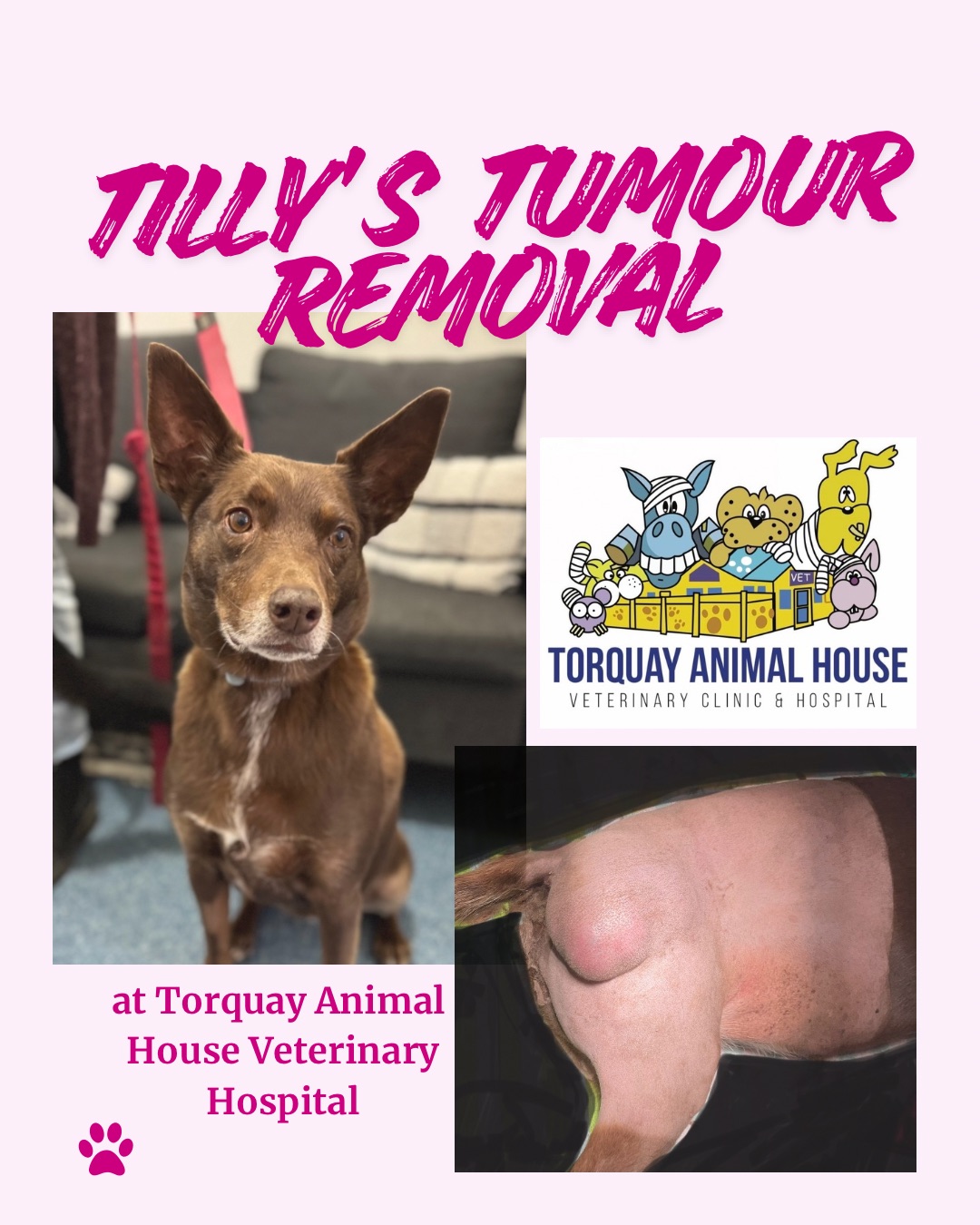
Meet Tilly, a beautiful nine-year-old Kelpie who recently came to Torquay Animal House Vets with a large lump that had been growing near her right hip for several months.
By the time Tilly was presented to us, the lump was approximately 15 centimetres in diameter. While not every lump on a dog is cancerous, any lump that is growing or changing, should be assessed by a veterinarian.
After examining Tilly and discussing the options with her family, we recommended surgical removal of the mass.
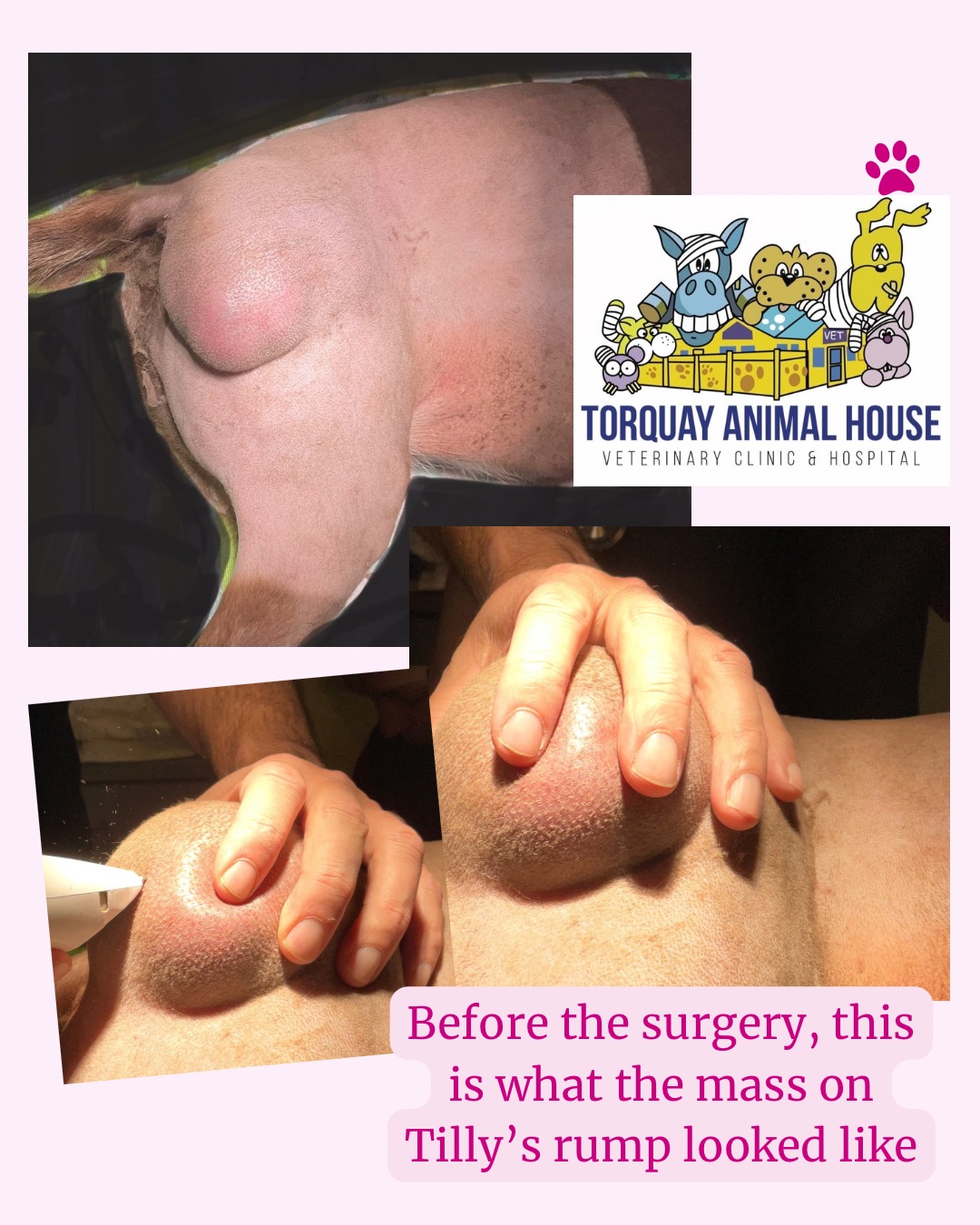
Removing a large tumour
Tilly’s surgery was more complex than a routine lump removal.
Because of the size and location of the tumour, removing it required us to take away a large amount of surrounding tissue. This is important when dealing with a suspected tumour because we want to remove the mass with an appropriate margin of healthy-looking tissue wherever possible.
The surgery was performed at Torquay Animal House Veterinary Hospital by Dr Katelyn and Dr Mark.
Once the tumour had been removed, we were then faced with another challenge: there was a large area of missing tissue that could not simply be closed with a conventional methods.
This sort of closure required advanced reconstructive surgery.
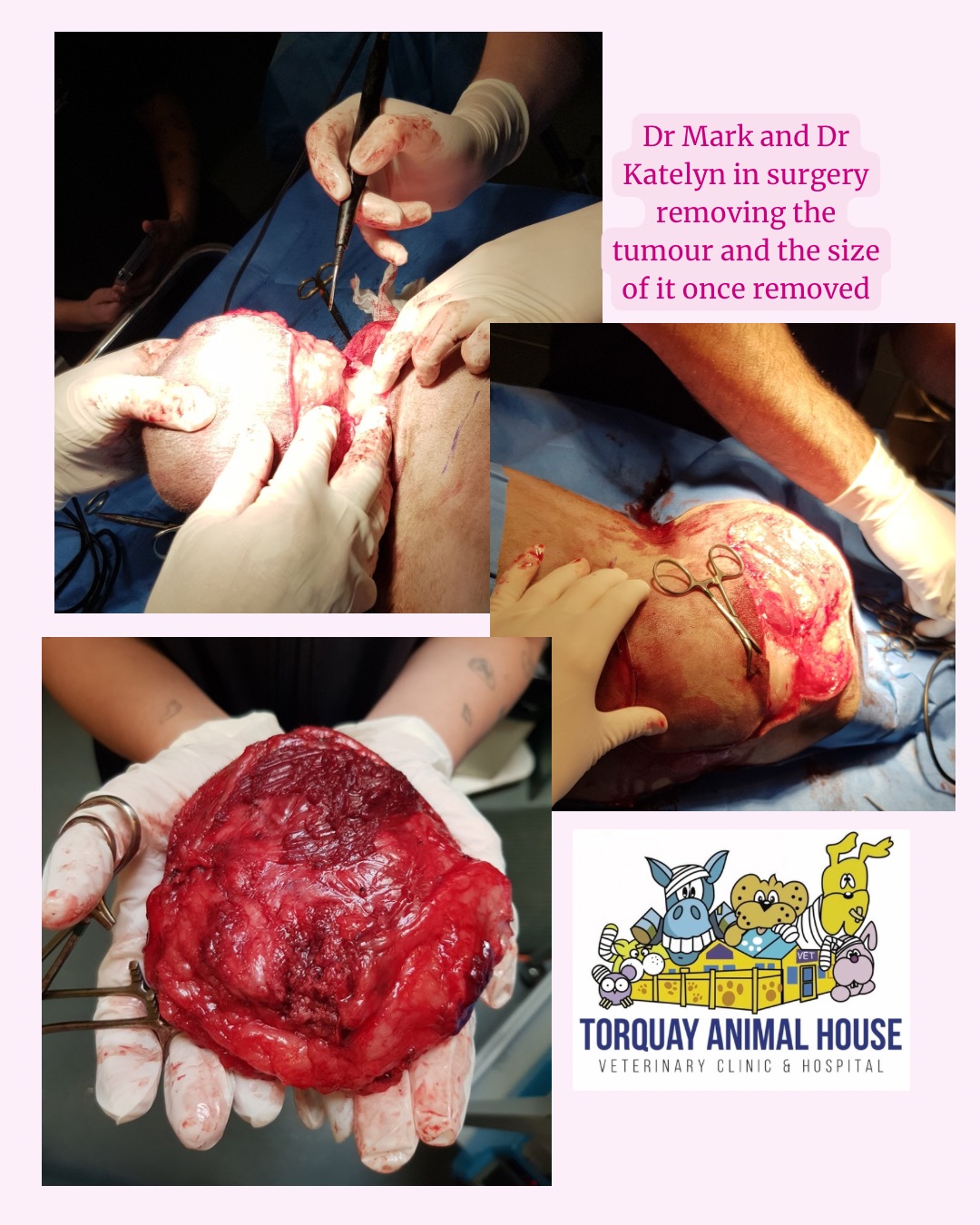
Using an axial pattern flap
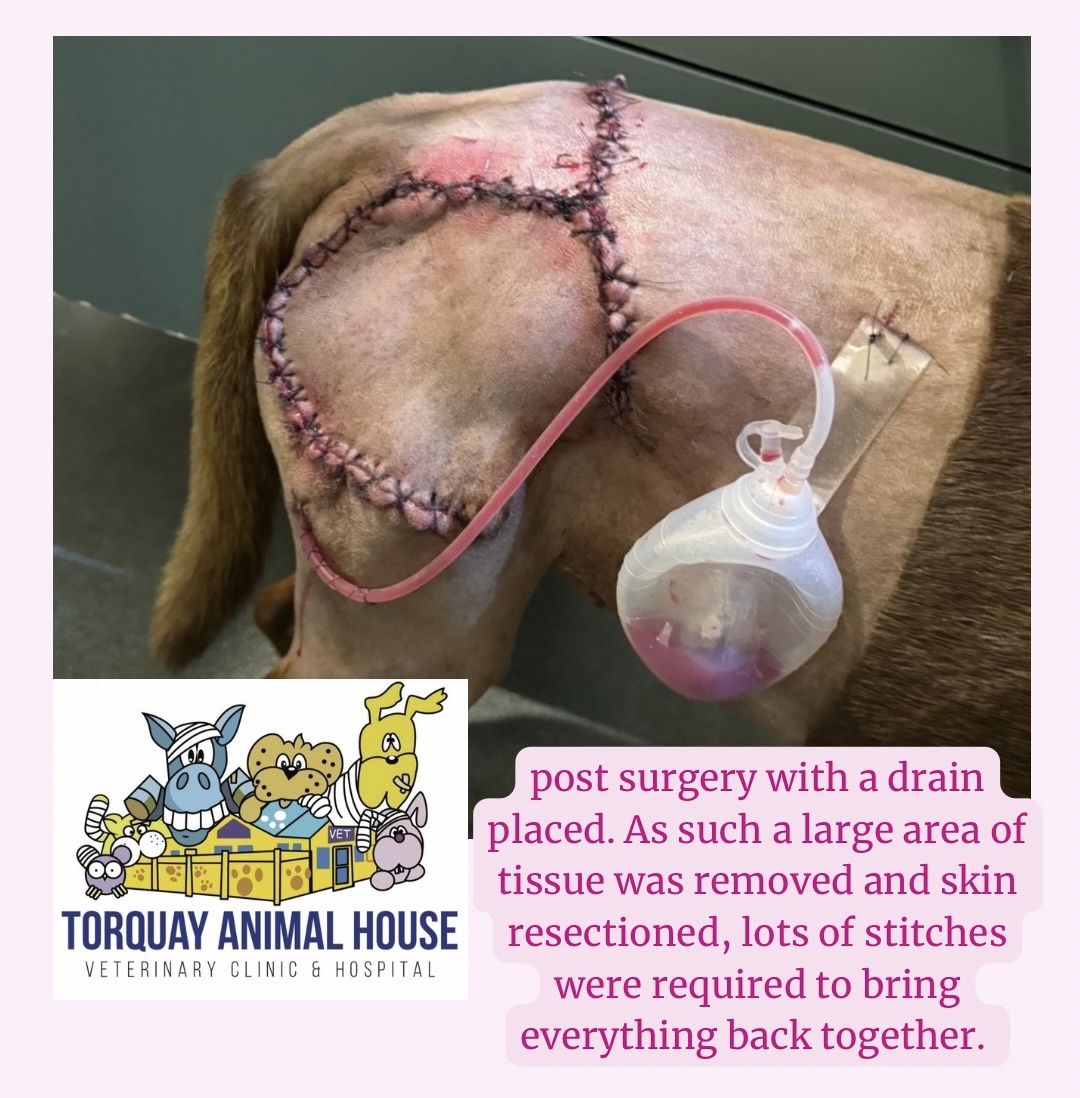
To reconstruct the area, Dr Katelyn and Dr Mark used an advanced surgical technique called an axial pattern flap.
An axial pattern flap allows us to carefully move a large section of healthy skin, together with its important blood supply, from an adjacent area to cover a significant surgical defect.
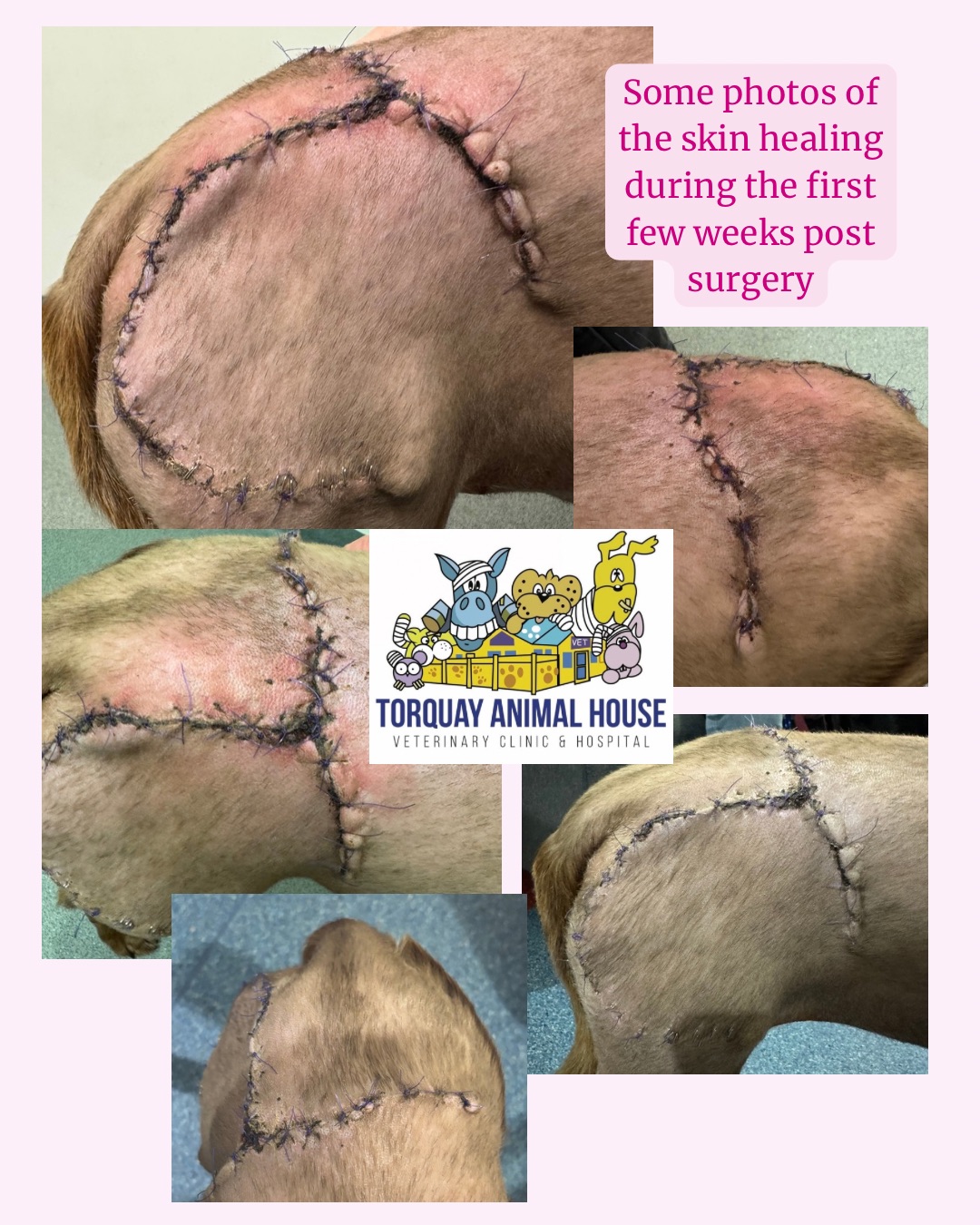
In Tilly’s case, the skin was carefully designed, elevated and rotated into position to cover the area left behind after removing the tumour. The reconstruction was then secured with multiple sutures, and closed suction drains were placed to help manage fluid while the tissues healed.
This type of surgery requires careful planning and an understanding of the blood supply to the skin. The goal is not only to remove the tumour effectively, but also to give the remaining tissues the best possible chance of healing.
The pathology results
The removed mass was submitted to a specialist veterinary pathologist for examination.
Unfortunately, the results confirmed that Tilly’s tumour was malignant.
However, there was also some very good news.
The pathology report confirmed that the tumour had been removed with clear surgical margins. This means there was no evidence of tumour cells extending to the edges of the tissue that had been removed.
While no surgery can guarantee what the future holds with a malignant tumour, achieving clear margins was the best surgical outcome we could have hoped for in Tilly’s case.
Tilly’s recovery
Following her surgery, Tilly returned to Torquay Animal House regularly over the following several weeks so that we could monitor her wound and recovery closely.
Considering the size and complexity of the surgery, Tilly recovered remarkably well.
There were no significant complications, and the reconstructed area healed beautifully.
And the best part?
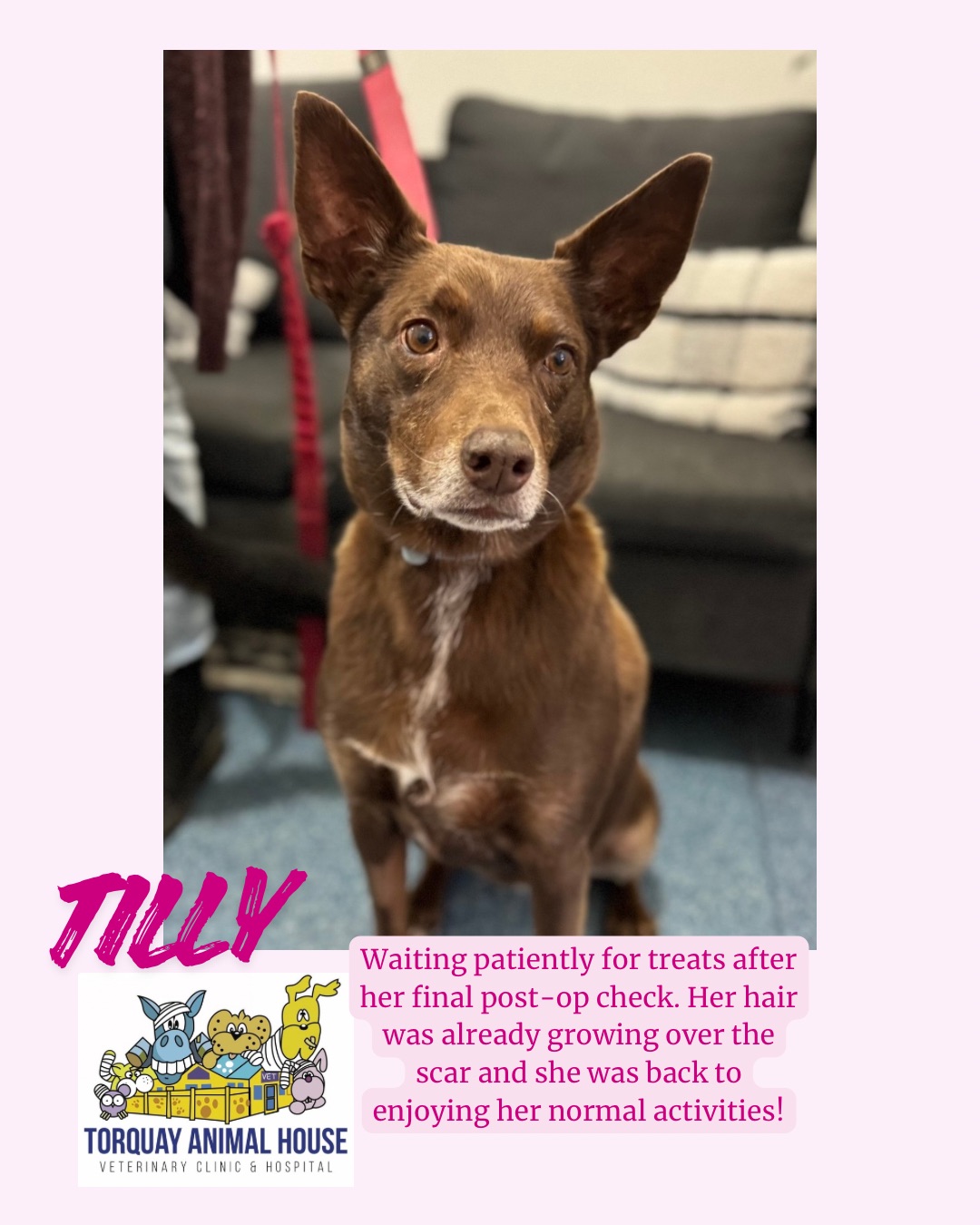
Tilly remained her happy, wonderful self throughout her recovery.
Today, she is happily back home with her family and living her best life.
What can we learn from Tilly’s case?
Tilly’s story is an important reminder that new or growing lumps on dogs should always be checked by a veterinarian.
Some lumps are benign and may never cause a problem. Others can be malignant and require more extensive treatment.
Early assessment can be particularly important when a lump is growing. If surgery is required, identifying a tumour while it is smaller can sometimes make surgical removal and reconstruction considerably easier.
Tilly’s tumour had grown to a significant size, meaning that her surgery required advanced soft tissue surgical techniques to remove the mass and reconstruct the resulting defect.
Fortunately, careful surgical planning, advanced reconstructive techniques and diligent postoperative care resulted in an excellent recovery.
All of us at Torquay Animal House Vets are incredibly proud of Tilly and delighted to see her back to her normal, happy life with her family.
Does your dog have a lump?
If you’ve noticed a new lump on your dog, or an existing lump that is growing or changing, don’t simply assume that it is harmless.
Our vets can examine the lump and discuss whether further investigation, such as sampling or biopsy, is appropriate or recommended, and discuss the most appropriate treatment options with you, including surgical removal if required.
Early assessment can make a difference.
The photographs accompanying Tilly’s case are shared with her family’s permission.